



WGEA Employer Statement 2026
Introduction
The Australian Public Service Commission (APSC) is committed to advancing gender equality across our workforce and strengthening our role as a leader within the Australian Public Service. We recognise that gender equality is essential to building a high ‑ performing, respectful and inclusive workplace and aligns with the APS Gender Equality Strategy 2021-26.
We are committed to ensuring fair and equitable treatment in recruitment, promotion, pay, development opportunities and leadership representation. Our approach is practical, evidence ‑ based and focused on continuous improvement.
The 2024 Public Sector gender equality census national and employer results will be released in early 2026. The Commission continues to set measurable goals for driving progress and supporting our ongoing journey towards addressing the gender pay gap.
Target range
WGEA considers gender pay gaps within and including (+/-5%) as the target range. This range, also known as ‘neutral’, allows for normal fluctuations in the workforce with recruitment, promotions and resignations.
Employers with a negative gender pay gap, pay the median or average woman more than the median or average man. When they are less than –5%, they are described as ‘in favour of women’.
Employers with a positive gender pay gap, pay the median or average man more than the median or average woman. When they are greater than +5%, they are described as ‘in favour of men’.
Our workforce gender profile
As at 31 December 2024, the Commission had an average total remuneration gender pay gap of 4.4%.
Our gender pay gap currently shows a gap in favor of men, which remains within the expected target range. While this may seem unexpected given that the majority of our employees are women, it is important to understand what the figure represents. The gap is not driven by men dominating leadership roles – women represent the majority of our workforce and are well represented across levels. Instead, the data whos that, on average, men are earning more than women even within comparable levels.
The Commission will continue to track the results of our actions (refer to Our Ongoing Commitment below) and regularly review and adjust our strategies to ensure sustained progress.
Our gender representation as at 1 February 2026
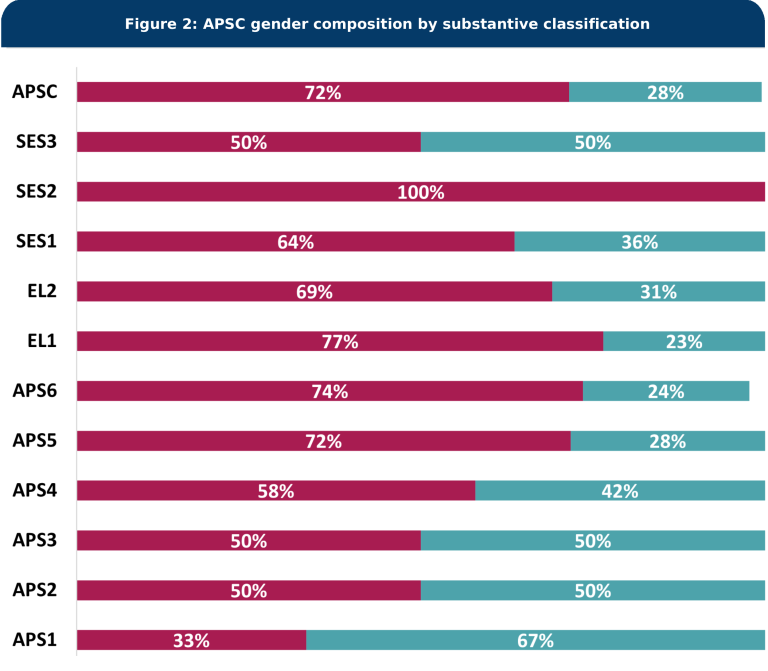
The following two figures show that a significant majority of our workforce is female. This reflects long standing trends where nature of our work and functions have historically attracted more women than men.
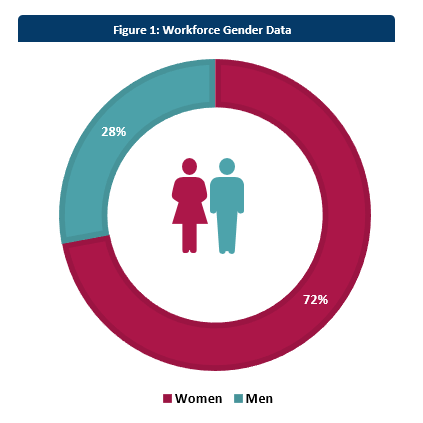
As at 1 February 2026, the Commission has strong representation of employees who identify as women across all staffing cohorts, including:
- 75% of our Senior Leadership Team (Senior Executive Service Bands 2 and 3)
- 70% of our managers spanning Executive Level 1 to Senior Executive Service Band 1
- 56% of our APS levels.
The Commission’s Commitment to Gender Equality
The Commission recognises that achieving gender equality requires sustained effort, leadership and accountability. It is not a single initiative, but an ongoing commitment embedded in how we operate. We will continue to advice gender equality by:
- Monitoring and addressing gender pay equity through regular review and transparent reporting
- Ensuring recruitment, promotion and succession processes are fair, consistent, and free from bias
- Supporting flexible working arrangements that enable employees to balance work and caring responsibilities
- Strengthening representation of women at senior and decision‑making levels
- Maintaining a workplace culture that does not tolerate discrimination, harassment or gender‑based harm
- Using workforce data to inform decision‑making and guide targeted improvement initiatives
We recognise that gender equality intersects with other aspects of diversity, including cultural background, disability, age and caring responsibilities. Our approach is informed by data and employee feedback, and we will continue to review our policies and practices to ensure meaningful progress.
Supporting Gender Equality Through Employee Networks
The Commission is proud of its employee-led Gender Equality Network, which champions for equal opportunity and gender equality, supporting all employees to thrive in both their professional and personal lives. Like with all Employee Networks, the Gender Equality Network contributes to fostering a workplace culture where everyone feels valued, safe and include
Our ongoing Commitment
Through visible leadership, clear accountability and active engagement with our workforce, the Commission remains committed to creating a workplace where all employees can contribute, develop and succeed