



A prepared and prosperous Australia

A prepared and prosperous Australia starts with people and businesses having the information and opportunities to make confident decisions. During 2025–26, the APS strengthened these foundations through better economic data and practical support for participation and growth.
Timely measures of inflation, including Australia’s first complete Monthly Consumer Price Index, give Australians and businesses a clearer picture of changing economic conditions. Tourism forecasting also brings together economic data, industry knowledge and expert advice to help businesses and governments plan with greater confidence.
Creating economic opportunity means making it easier for businesses to engage with government and for Australians to build financial security. Procurement support for more than 1,100 businesses and new housing initiatives during 2025–26 are examples of this work in practice.
Economic prosperity is strongest when people across the community can participate and benefit. Gender Responsive Budgeting strengthens the evidence behind policy decisions and helps decision-makers understand how policies may affect different groups.
Building a clearer picture of economic change

Monthly Consumer Price Index publications helping consumers make decision around cost of goods.
Image: Australian Bureau of Statistics/Getty Images
Australia's first complete Monthly Consumer Price Index (CPI) Indicator is transforming how Australians understand inflation and cost-of-living pressures. At a time of strong public interest in inflation, timely information helps Australians better understand changing economic conditions.
On 26 November 2025, the Australian Bureau of Statistics (ABS) released the first complete Monthly CPI publication, which became Australia's primary measure of headline inflation. This milestone was the culmination of more than 2 years of effort. Work began with government investment in July 2023 to design and rebuild the tools and cloud infrastructure needed to support full monthly data collection and processing from April 2024. The move aligned Australia with international best practice and strengthened the nation’s economic information infrastructure. More frequent data enables earlier detection of economic trends. It also provides better information for evidence-based decision-making across governments, businesses, financial markets, researchers and the Australian community.
For decades, Australia's headline measure of inflation was published quarterly. Through its Big Data, Timely Insights program, the ABS modernised its statistical systems, data collection and analytical methods. It did so to deliver a complete Monthly CPI, significantly improving the timeliness of one of the nation's most important economic indicators.
Delivering Australia's first complete Monthly CPI required collaboration across government, industry, academia and the broader statistical community. The ABS partnered with a range of stakeholders. This included:
- the Reserve Bank of Australia (RBA)
- state and federal treasuries
- Department of Social Services
- the Australian Financial Markets Association
- Professor Kevin Fox (UNSW)
- Professor Rodney Strachan (UQ)
- the Economic Statistics Centre of Excellence
- the Organisation for Economic Co-operation and Development
- experts from the national statistical offices of Canada, the Netherlands and New Zealand.
These partnerships informed the design, testing and implementation of a new approach to measuring inflation. Throughout the project, the ABS worked closely with key users of inflation statistics to ensure the new measure met Australia’s needs while maintaining confidence in official statistics. Users included the RBA, Australian Office of Financial Management and International Monetary Fund.
Australian businesses supported the initiative by providing more frequent price data, improving the timeliness, quality and coverage of inflation statistics. Before the complete Monthly CPI, around 50% of the CPI basket was priced each month. This increased to 87% once monthly price collection was expanded. When combined with the 9% of the basket collected annually for items that typically change price once a year, such as school fees and private health insurance, the Monthly CPI now covers 96% of the CPI basket.
Formal consultation was held in late 2023 with government agencies, economists, researchers and other key users. Consultation emphasised the importance of maintaining data quality and coverage, retaining key analytical series and continuing the publication of detailed CPI data and commentary. Feedback informed the final design of the Monthly CPI and was published by the ABS in February 2024.
ABS teams modernised infrastructure and expanded monthly data collection and redesigned production processes. Teams worked across methodology, data acquisition, technology, operations, and communications and dissemination. This organisation-wide effort helped ensure the transition was smooth, transparent and trusted.
In its November 2025 Statement of Monetary Policy, the RBA described the introduction of the complete Monthly CPI as a ‘significant milestone’. It also noted that the indicator would align Australia with international best practice. The Australian Statistician, Dr David Gruen AO, highlighted the benefits of earlier detection of inflation trends and stronger evidence for policy decisions.
By bringing together diverse expertise and perspectives, the ABS delivered a major enhancement to Australia's statistical system while maintaining the quality, integrity and trust underpinning official statistics. The transition brings Australia into line with other leading economies that publish monthly inflation statistics. It also strengthens relationships with data providers and users and supports better decisions for Australians.
Forecasting Australia’s tourism future

Visit Victoria promotion photo.
Image: Australian Trade and Investment Commission
Each year, Tourism Research Australia publishes forecasts on the expected trajectory of domestic and international tourism in Australia. Forecasts provide an updated view of projected visitor numbers, nights and expenditure over a 5-year horizon. They support policy and industry planning by providing a shared evidence base for the sector’s future direction.
Tourism forecasts are an important resource for industry, governments, investors and communities. They inform workforce planning, infrastructure investment and policy settings, helping stakeholders prepare for changing demand and market conditions.
By providing a consistent, evidence-based view of the outlook, the forecasts reduce uncertainty and support more coordinated planning across the visitor economy. Industry and government stakeholders use these insights to inform strategic planning and investment decisions.
Tourism Research Australia uses a hybrid forecasting methodology combining quantitative modelling with expert advice and stakeholder consultation. These ensure that projections are both data-driven and informed by industry expertise.
This methodology draws on a broad range of more than 20 data sources. Examples are official tourism statistics, broader economic indicators, and qualitative insights from industry reports and economic outlooks. A Tourism Forecasting Expert Panel provides advice on key assumptions, risks and emerging trends. In addition to the expert panel, Tourism Research Australia’s forecasting work is supported by ongoing consultation with state and territory governments and industry stakeholders. In total, it consulted with more than 30 stakeholders during the project.
Forecasts are delivered through a suite of products, including detailed reports, data tables, infographics, webinars and conference presentations. This helps stakeholders access and apply insights in formats that suit their needs.
This approach was recognised internationally, leading to collaboration with the Organisation for Economic Co-operation and Development to establish effective tourism forecasting processes in Europe.
Building procurement capability across government and industry
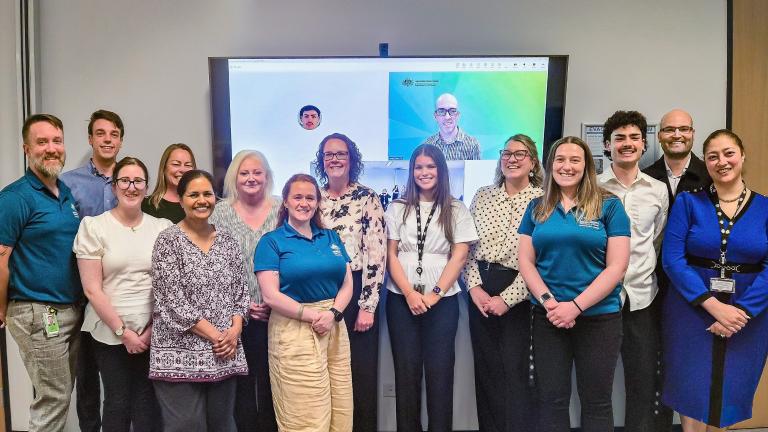
Staff from the Procurement Capability Branch, Finance.
Image: Finance
Finance is strengthening procurement and contract management capability across the APS while helping businesses better understand how to work with government.
The Procurement Capability Branch is building skills, supporting professional development and improving access to practical guidance for both APS officials and suppliers. This work helps create a more effective and collaborative procurement system, supporting better outcomes for government, businesses and the community.
The branch delivers learning opportunities through facilitated training, eLearning and microlearning programs. Initiatives such as Pathways to Procurement and Procurement Capability Week help APS employees build the skills needed to manage procurement and contracts with confidence.
The Procurement and Contract Management Profession complements this training by providing career pathways, specialist development opportunities and communities of practice. As at September 2026, more than 3,900 officials were connected through the profession’s community platform, sharing knowledge, discussing common challenges and learning from each other's experiences.
The branch also works directly with Australian businesses to improve understanding of the Commonwealth Procurement Framework. In 2025–26, the branch delivered 19 workshops that supported more than 1,100 businesses. These workshops, together with online resources, help suppliers better understand procurement processes, identify opportunities and prepare stronger responses to government tenders.
Feedback from agencies and businesses plays an important role in shaping the program. Finance uses a test-and-learn approach, piloting new training products, gathering feedback and continuously improving resources. This helps ensure guidance remains relevant and accessible for users.
The impact of this work is being seen across the APS. More than 23,000 training completions were recorded across more than 130 entities since September 2023. Around 80% of participants reported improved knowledge and greater confidence in applying procurement and contract management principles in their roles.
Strong procurement and contract management capability supports agencies to achieve value for money, manage risk and deliver services effectively. It also strengthens integrity and accountability in the management of public resources.
Helping Australians into home ownership pathways

Helping more Australians into home ownership
Image: Treasury/Getty
Helping more people into home ownership is an important part of the Australian Government’s housing agenda. The government rolled out 2 initiatives in 2025–26 to help more eligible Australians buy a home of their own. Initiatives reduced the time it takes to save for a deposit and lowered ongoing mortgage repayments.
Housing affordability remains a significant challenge for many Australians. Home ownership rates have declined over past decades, while dwelling prices have increased relative to income. Saving for a deposit has been a substantial barrier to entering the housing market – and that is where these initiatives are helping.
5% Deposit Scheme eligibility settings
On 1 October 2025, eligibility settings for the 5% Deposit Scheme were expanded. Annual limits on the number of places and applicant income caps were removed, while property price caps were increased. This is enabling more people to access the scheme and buy a wider range of homes.
The 5% Deposit Scheme enables eligible home buyers to buy a home with a 5% deposit, or 2% for eligible single parents and legal guardians, without paying Lenders Mortgage Insurance. The scheme reduces upfront costs associated with buying a home.
Since 1 October 2025, the 5% Deposit Scheme has helped more than 104,000 people buy a home, including more than 1,000 single parents (as of 30 September 2026).
Help to Buy Scheme
On 5 December 2025, the Help to Buy Scheme launched. The scheme will support up to 40,000 low-to middle-income Australian households to buy a home during its first 4 years of operation.
Under the scheme, the Australian Government contributes up to 40% of the purchase price of a home through a shared equity arrangement. This reduces the size of the deposit needed to buy a home and the size of the home loan, resulting in lower mortgage repayments.
Since its launch in December 2025, more than 7,000 scheme applications have been approved, helping more than 9,000 Australians buy their own home (as of 30 September 2026).
Housing Australia delivers the 5% Deposit Scheme and Help to Buy Scheme with support from The Treasury. Following machinery-of-government changes in mid-2025, The Treasury now oversees all Australian Government housing functions.
These programs form part of the Australian Government’s $47 billion Homes for Australia plan to rebuild the housing system, so it works for all Australians. The plan brings together actions to build homes faster, support renters and make it easier for people to buy their first home. It includes recent changes to the tax system to level the playing field for first home buyers.
Assessing gender impacts of government policy and investment
The Office for Women works across government to place women and gender equality at the centre of policy and decision-making through its stewardship of Gender Responsive Budgeting (GRB). GRB is a core Australian Government commitment. It drives gender equality by giving decision makers information about the gendered impacts of proposals being considered by the Cabinet and its committees. GRB progresses the ambitions of Working for Women: A Strategy for Gender Equality, by ensuring policies are evidence based and consider impacts on gender equality.
In December 2025, the Office for Women updated Including Gender: An APS Guide to Gender Analysis and Gender Impact Assessment. The guide helps policymakers deliver high-quality gender analysis, a process critical to policy development. It includes conducting research, interrogating data, exploring stakeholder or community views, and considering the different ways a policy may impact people based on gender.
Working for Women: A Strategy for Gender Equality infographic.
Image: Office for Women
GRB is the responsibility of all Australian Government departments. It helps shine a light on the costs and benefits of government investment across different groups in the community, so decision makers can make choices based on the best information available. By weaving consideration of gender equality through the Cabinet and Budget processes, GRB helps the government in multiple ways. This includes identifying funding and supporting measures to close gender gaps and avoiding decisions that could inadvertently exacerbate gender inequality.
GRB informs a wide range of economic and social policies where gender gaps exist. The Women’s Budget Statement showcases government investments across the priorities of Working for Women. Priorities include gender-based violence, unpaid and paid care, economic equality and security, health and leadership, representation and decision-making. The statement includes examples of where gender analysis has been used to inform policies including tax, superannuation and housing.
A guiding principle of Working for Women is that efforts to drive gender equality must be inclusive. Existing inequalities, attitudes and stereotypes can drive inequality, so even when a proposal seems gender neutral it can still impact people differently or disproportionately. It can do so based on personal gendered experience and the interaction of other circumstances and characteristics. Using data and evidence to examine the complexity and diversity of people’s experiences provides insights into the systemic and cultural causes of inequality. These then provide the basis for good policy design and solutions that are culturally appropriate, accessible, equitable, evidence based and targeted.
See also in this report
A capable and future ready APS, Maturing the APS Professions model, State of Service Report 2026.
Supporting Australia’s economic future, Creating jobs and economic opportunities in remote communities, State of Service Report 2026.
Find out more
Australian Bureau of Statistics (2025) Complete Monthly Measure of the CPI, ABS website, accessed 1 September 2026.
Australian Bureau of Statistics (2026) ABS Corporate Plan 2025–26, ABS website, accessed 1 September 2026.
Reserve Bank of Australia (2025) Statement on Monetary Policy – November 2025, RBA website, accessed 24 September 2026.
Australian Government (2026) First Home Buyers, Australian Government website, accessed 3 September 2026.
Australian Government (2026) Women’s Budget Statement, Budget 2026–27 website, accessed 2 September 2026.
Australian Trade and Investment Commission (Austrade) (2025) Tourism forecasts for Australia 2025 to 2030, Tourism Research Australia website, accessed 4 September 2026.
Finance (2026) Commonwealth Procurement and Contract Management Training Suite, Finance website, accessed 2 September 2026.
Finance (n.d.) Selling to government, Finance website, accessed 2 September 2026.
Finance (2016) Pathways to Procurement Program, Finance website, accessed 11 September 2026.
Finance (2026) Procurement Capability Week, Finance website, accessed 11 September 2026.
Prime Minister and Cabinet (2026) Working for Women: A Strategy for Gender Equality, PM&C website, accessed 2 September 2026.
Prime Minister and Cabinet (2025) Including Gender: An APS Guide to Gender Analysis and Gender Impact Assessment, PM&C website, accessed 8 September 2026.
The Treasury (2026) Homes for Australia: A National Plan, The Treasury website, accessed 3 September 2026.