



Innovation through business and industry partnerships

The APS is working with businesses, industry, researchers and communities to support innovation, create jobs and strengthen Australia’s economy. These partnerships help bring new products and technologies to market, improve workforce capability and support investment in future industries.
Across government, agencies are combining expertise and evidence to help businesses grow and compete in changing markets. The National Measurement Institute and an Australian biotechnology company collaborated, to support the introduction of Australia’s first cultured meat products. The collaboration is helping foster innovation while maintaining consumer confidence.
The APS is also strengthening the data and insights that businesses and governments use to make decisions about investment, workforce planning and economic growth. Through procurement, supplier engagement and industry partnerships, agencies are helping businesses work more effectively with government while delivering better outcomes for Australians.
By bringing together expertise from across sectors, the APS is supporting a more productive, innovative and resilient economy that benefits Australian communities.
Partnering to bring cultured meat to market
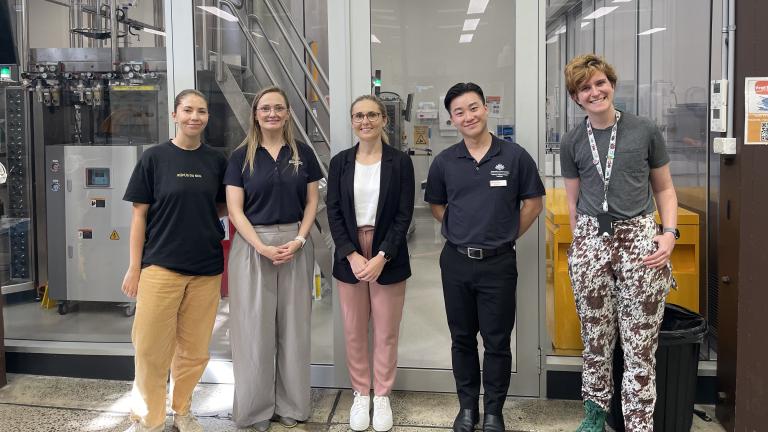
Staff from the National Measurement Institute worked with researchers from Vow to produce lab grown meat for market.
Image: National Measurement Institute
A partnership between the National Measurement Institute and Australian biotechnology company Vow demonstrates how scientific expertise can support the safe introduction of new technologies while helping businesses bring products to market.
Vow, a Sydney-based biotechnology technology company, produces cultured meat from animal cells. Using Japanese quail cells, the company developed 3 products:
- foie gras
- whipped parfait
- edible tallow candle.
Before these products could be sold in Australia or overseas, they required approval from food regulators.
As cultured meat is a novel-food, regulators required robust scientific evidence to assess its safety and suitability. To support this process, National Measurement Institute worked closely with Vow. Together, they developed specialised testing methods and provided scientific information for regulatory review.
Both entities joined forces in December 2021. Working together early in the product development process, they identified the information regulators needed and developed a practical testing approach. This early planning created a clear path from product development to regulatory assessment.
The National Measurement Institute brought specialist expertise in measurement science and testing. It analysed product samples, developed new methods to assess cultured meat and prepared clear findings that could be used as evidence in approval applications. In early 2025, Vow provided product samples and technical information, while food regulators assessed evidence and made final approval decisions.
The process also drew on regulatory requirements in multiple jurisdictions to help inform the evidence needed to support assessment of the products. Jurisdictions included Food Standards Australia New Zealand, the Singapore Food Agency and the United States Food and Drug Administration. Understanding requirements early supported the testing program to produce information that could be used across different markets.
The project demonstrates the value of combining innovation with strong regulatory frameworks. Reliable testing and expert scientific advice helped regulators make informed decisions while maintaining confidence in the safety of new products. This approach supports consumer protection and helps build public trust in the regulatory system.
Broader economic benefits emerged. When Australian businesses can meet regulatory requirements more effectively, they can bring products to market sooner and compete in global markets. This can support investment, create jobs and encourage growth in emerging industries.
This collaboration highlights how government and industry can work together to support innovation while maintaining rigorous standards. It demonstrates how scientific expertise, clear regulation and effective partnerships can help Australian businesses commercialise new technologies. This, in turn, contributes to the government's Future Made in Australia agenda and supports long-term economic growth.
Illuminating Australia’s invisible industries
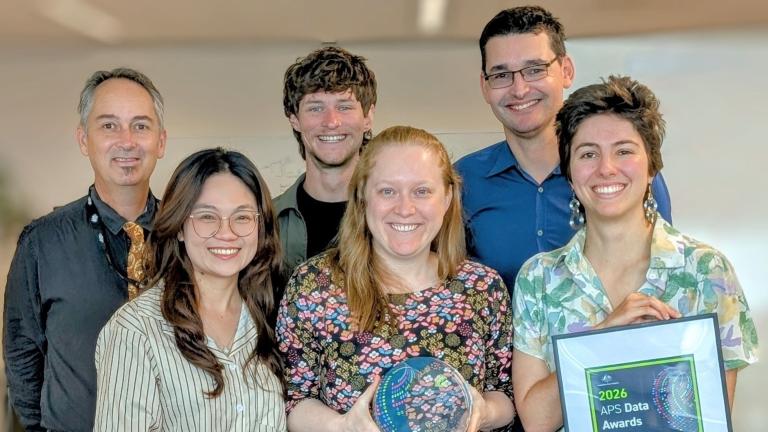
The Department of Industry, Science and Resources team celebrates receiving the APS Data Award, recognising its work to strengthen the use of data and evidence in government decision-making.
Image: Department of Industry, Science and Resources
The Department of Industry, Science and Resources (DISR) combined deep learning algorithms and econometric methods to develop the Emerging Industries Database (EID). The database enables better insight into Australia’s emerging industries, what they look like and how they are growing. This project received an APS Data Award in March 2026.
The EID illuminates Australia’s previously invisible emerging industries:
- artificial intelligence
- quantum
- biotechnology
- prefabricated construction
- clean energy
- robotics
- space industries.
These industries will shape Australia’s future prosperity, resilience and security. Policymakers have had limited visibility of their scale, capabilities and workforce. The EID fills this gap, providing a robust evidence base to inform decisions on investment, skills, and industry policy.
By making emerging industries visible, the database enables more targeted and effective policy. This helps ensure Australia can capture opportunities, respond to global competition, and build the industries that will drive the next generation of economic growth.
DISR partnered with United Kingdom-based Glass.AI between December 2024 and April 2025 to identify businesses in emerging industries based on their online presence. Glass.AI used cutting-edge and privacy-compliant deep learning to classify businesses into policy-relevant industry definitions, creating a new way to map these fast-moving sectors.
Between April and July 2025, DISR collaborated with the Australian Bureau of Statistics (ABS) to link this information with secure tax and employment data in the ABS DataLab. This integration enables rigorous population-scale analysis of emerging industries. By making the EID available to government and researchers, DISR has turned previously invisible sectors into a shared evidence base for policy and research.
Following the successful pilot, a second iteration of the EID was developed in 2025–26. It expands coverage substantially and establishes the basis for an annual longitudinal asset. DISR is working with the ABS and Glass.AI on how this method of data collection can tackle other tricky policy questions.
Australian Human Rights Commission’s Equality at Work project
While people with disability continue to face barriers to employment, career progression, and workplace participation, employers often lack the practical support and confidence needed to create truly inclusive workplaces. The Australian Human Rights Commission’s Equality at Work project is helping to address these challenges, through a collaborative, human rights-based approach.
Equality at Work is led by the Disability Discrimination Commissioner. It brings together employers, people with disability, community organisations, researchers and industry partners to design, implement and evaluate practical solutions to systemic employment barriers. Rather than applying a single model, participating organisations develop and test tailored initiatives within their own workplaces. In doing so, they generate evidence about what works in different contexts.
The principle of ‘nothing about us without us’ is at the centre of the project. People with disability play leadership roles across governance, design, delivery and evaluation. The project includes 6 expert advisory group members and 14 ambassadors with disability, from diverse industries, backgrounds, and lived experiences. This ensures the initiative is practical, relevant and grounded in human rights.
Many organisations have participated. Examples include the Australian Broadcasting Corporation, Burwood Council, City of Sydney Council, Ernst & Young, Hotel Etico, New South Wales Health, PricewaterhouseCoopers, Wollongong City Council, YouthWorX NT, JobAccess, Australian and New South Wales public service commissions, Australia Post, Boston Consulting Group, CommBank, Herbert Smith Freehills, Kmart, Medibank, Microsoft, Rio Tinto, University of Queensland, Westpac and Woolworths. La Trobe University is the project's developmental evaluation partner.
Over the past year, all 9 pilot employment programs have been implemented. Two pilots have been completed and 7 are approaching completion. The project is generating practical insights into what works, for whom, and under what conditions, helping build an evidence base for disability-inclusive employment practices across Australia.
The Australian Human Rights Commission has published a suite of resources to support employers and people with disability understand their rights, responsibilities and obligations. In the past year, the project has delivered disability rights employment training to more than 150 participants across Australia. This training has increased understanding of disability rights, workplace inclusion, accessibility and adjustments.
In the Northern Territory, YouthWorX NT has completed a train-the-trainer program with the commission as part of the Equality at Work project. YouthWorX NT is now preparing to deliver disability awareness training in Darwin and Alice Springs. Several young people with disability who completed the program are now taking lead roles in delivering training themselves.
A key initiative has been the delivery of listen and learn sessions. These bring together senior organisational leaders and employees with disability to share experiences and identify practical actions to improve workplace culture and inclusion. These facilitated conversations create safe spaces for honest dialogue. They also increase understanding of lived experience and strengthen organisational commitment to change.
The Equality at Work project is strengthening inclusive employment systems at scale and delivering benefits for people with disability, employers and the wider community. Early findings indicate participating organisations are:
- increasing leadership engagement
- strengthening workplace inclusion practices
- improving confidence in meeting their obligations under disability discrimination law.
Pilot initiatives, including workplace adjustment passports, are also supporting implementation of recommendations from the Royal Commission into Violence, Abuse, Neglect and Exploitation of People with Disability.
See also in this report
A capable and future ready APS, Effective and inclusive leadership, State of Service Report 2026.
Supporting Australia’s economic future, Forecasting Australia’s tourism future, State of Service Report 2026.
Working in the APS, Making regulation work better for people and business, State of Service Report 2026.
Working in the APS, Improving accessibility and disability inclusive workplaces through the Disability Royal Commission Taskforce, State of Service Report 2026.
Find out more
Australian Government (2026) 2026 winners and finalists, APS Data Awards website, accessed 1 September 2026.
Australian Human Rights Commission (n.d.) Inclusive employment initiative (Equality at Work), AHRC website, accessed 1 September 2026.
National Measurement Institute (2025) Getting lab-grown meat to market, DISR website, accessed 31 August 2026.