



Making tax and superannuation systems more accessible for people experiencing vulnerability


Launch of the ATO Vulnerability Framework
Front row, from left: Helen Eade, Michelle Mathews, Commissioner Rob Heferen, AC Robert Thomson, Katie Abela, Chanara Fraser. Back row, from left: DC Karen Foat, DC Anna Longley, DC Rowan Fox, Josh Haugh, Sara Darmenia, Dalisay Krege, Verity Langer.
Image: ATO
People experiencing vulnerability can face additional barriers when interacting with government services. In October 2025, the ATO launched a Vulnerability Framework. This initiative is designed to help ensure people engaging with the tax and superannuation systems receive support that is accessible, inclusive and responsive to their circumstances.
The Framework reflects a broader shift across the APS towards people-centred service delivery that prioritises equity and inclusion. It supports a more consistent approach to recognising and responding to vulnerability across the organisation. This helps to reduce barriers and improve people's experiences when engaging with tax and superannuation services.
The ATO is embedding vulnerability considerations into service design, processes and workforce capability. This strengthens the ATO's ability to tailor its engagement with taxpayers where appropriate and respond to evolving community expectations.
Development of the Framework has been shaped through collaboration with advocates, financial counsellors, community organisations, government partners and people with lived experience. These partnerships have deepened understanding of the challenges experienced by people in vulnerable circumstances. They have also informed practical improvements to services, guidance and support. This collaboration demonstrates how government agencies and community organisations can work together to strengthen services and achieve better outcomes for Australians.
Investments in staff training, guidance, tailored support tools and the application of Safety by Design principles supports this approach. Together, these investments help staff recognise vulnerability, understand how personal circumstances can affect interactions with government, and respond appropriately.
During 2025–26, this capability-building included reshaping the Frontline Operations Tailored Support Hub. The Hub brings together the Specialised Client Support Team, Advocates Help Desk, Indigenous Helpline and hardship-related services. Joining forces enables more coordinated and responsive assistance for people who need additional care or tailored support.
By lowering barriers and improving service experiences for people experiencing vulnerability, the ATO is contributing to increased confidence and trust in government services. At the same time, the ATO is supporting more inclusive public service delivery for all Australians.
Delivering tax entitlements to Australians in remote communities
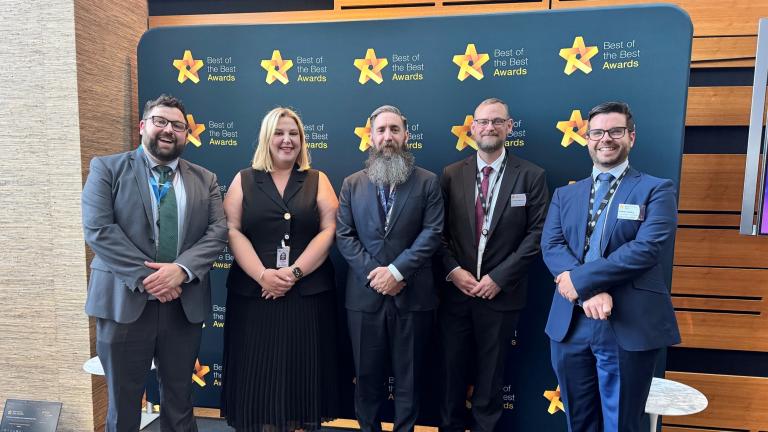
The ATO’s Zone Offset Team with Jonathan Garrett, Sara Darmenia, AC Robert Thomson, Tim McIntyre and Patrick Healy.
Image: Australian Taxation Office
Following outreach activities with First Nations communities in August 2024, the Australian Taxation Office (ATO) identified many people in eligible remote and isolated areas who had not claimed the Remote Zone Tax Offset despite being entitled to it. Insights from these communities and partners involved in the ATO’s Vulnerability Capability confirmed the issue and highlighted an opportunity to improve tax outcomes for people facing barriers to engagement.
Within six months, the team worked across the ATO to develop a solution that identified eligible taxpayers, calculated entitlements and amended returns to deliver the offset. Through testing, sampling and assurance activities, it established a robust methodology that provided confidence in the accuracy and lawful application of the amendments.
The team also tailored its engagement approach to build trust and support understanding in affected communities. Working with government and community partners, including financial counsellors, the First Nations Foundation and the ATO Moondani Network, it developed culturally appropriate communications and shared information with local support services. This helped taxpayers understand the amendments and reduced opportunities for scammers to imitate ATO communications.
In January 2025, the program delivered benefits to around 60,000 taxpayers. Tax return amendments generated approximately $27 million in refunds and reduced existing taxpayer debt by around $7 million.
The initiative shows how community insight, trusted partnerships and data analytics can be combined to ensure that Australians are paying the right amount of tax. It improved outcomes for First Nations people and other Australians living in remote areas while strengthening participation in the tax system. In recognition of its impact, the project was named a Best of the Best finalist in the People’s Choice category of the ATO Internal Awards. Following the amendment program, and drawing on insights from stakeholders, Tax Time 2026 saw the launch of a redesigned zone tax offset to make it easier for taxpayers to calculate their offset when lodging their tax return.
Tax and Super Basics campaign for culturally and linguistically diverse communities
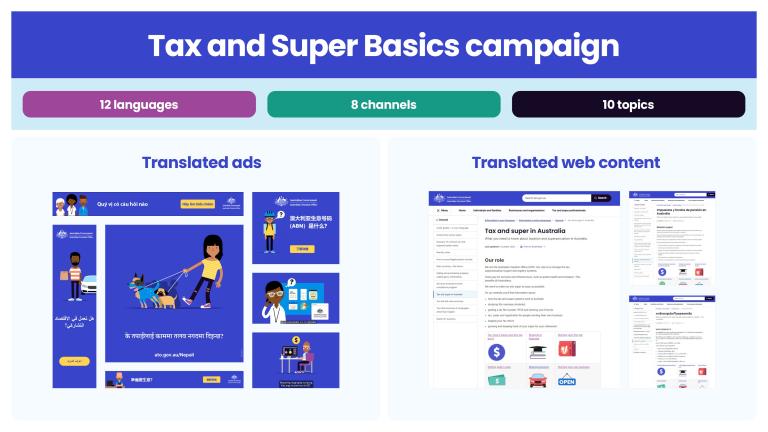
Tax and Super Basics campaign: Connecting multicultural communities with trusted tax and super information.
Image: ATO
More than one-fifth of Australians speak a language other than English at home, and more than 1.6 million people speak English 'not well' or 'not at all'. ATO research found that culturally and linguistically diverse (CALD) communities can face barriers to understanding their tax and superannuation rights and obligations. These barriers include language differences, limited familiarity with Australia’s tax and super systems, cultural differences in financial practices, and reluctance to engage directly with government agencies.
In response, the ATO delivered the Tax and Super Basics campaign to improve access to tax and superannuation information for CALD communities. The campaign aimed to raise awareness of the ATO's role, increase use of in-language resources, and support more confident participation in the tax and superannuation system.
Using research, community insights and operational data, the ATO identified 12 target language communities and developed tailored content across digital, social media, video and radio channels. Advertising directed audiences to translated online content and audio resources. Campaign activity aligned with key events, including tax time and common milestones such as starting work or establishing a business.
The campaign delivered strong results during 2025–26. Advertising generated more than 27 million impressions, helping to raise awareness of the ATO and key tax and superannuation topics among target communities. The campaign also successfully drove audiences to in-language information, generating more than 154,000 visits to campaign resources. While advertising was active, campaign pages received nearly 600 views a day on average, compared with 60 views a day when advertising was not running.
Community feedback and social media sentiment were overwhelmingly positive. Audiences expressed appreciation for information being available in their preferred language. Feedback also indicated increased confidence in accessing tax and superannuation information and engaging with the ATO.
The campaign strengthened the ATO’s approach to communicating with CALD communities. Insights from audience research, tailored content and ongoing evaluation informed future communication activities. Insights also reinforced the value of culturally inclusive communication in supporting participation in Australia’s tax and superannuation systems.
See also in this report
A healthy and safe Australia, Safer interactions while supporting customers with complex needs, State of Service Report 2026.
A healthy and safe Australia, Social security debt waiver laws and people experiencing vulnerability, State of Service Report 2026.
Find out more
Australian Taxation Office (2026) Our Vulnerability Framework, ATO website, accessed 31 August 2026.
Australian Taxation Office (2026) ATO Vulnerability Framework, ATO website, accessed 31 August 2026.
Australian Taxation Office (2026) Zone Tax Offset, ATO website, accessed 8 September 2026.
Australian Taxation Office (2026) Tax and super in Australia, ATO website, accessed 7 September 2026.