



Conserving and sharing Australia’s service history

The Australian War Memorial combines a shrine, a world-class museum and an extensive archive. Its purpose is to commemorate the sacrifice of Australians who have died in war or on operational service, and those who have served the nation in times of conflict. Through its collections, exhibitions and commemorative spaces, the Memorial helps Australians connect with and understand the nation's wartime experience. Continued investment in its facilities and specialist capabilities is improving access to nationally significant stories and objects, helping preserve Australia’s military heritage and share it with current and future generations.
Anzac Atrium and Anzac Hall transform the Australian War Memorial
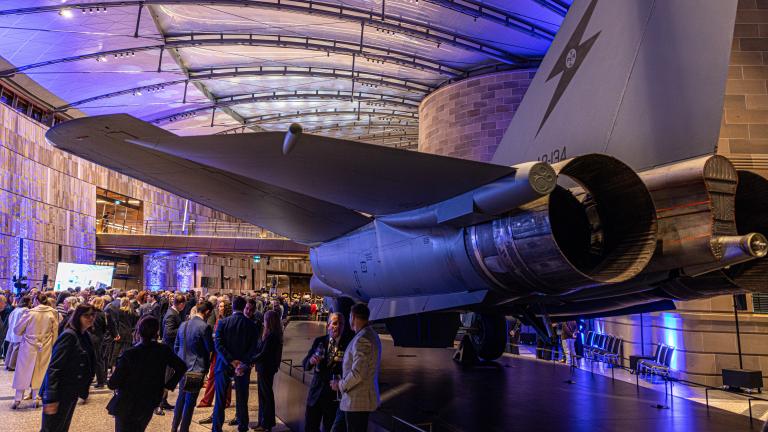
Official opening of Anzac Hall and the Anzac Atrium.
Image: Australian War Memorial
In 2025–26, the Australian War Memorial reached a major milestone with the opening of the Anzac Atrium and Anzac Hall. The milestone strengthens the Memorial’s ability to fulfil its role as a shrine, museum and archive. It also creates new opportunities for visitors to engage with Australia’s military history.
The new facilities expand exhibition and visitor spaces, enabling the Memorial to share contemporary stories of service. This includes stories from Afghanistan, peacekeeping operations and the Middle East. Expanded galleries and reimagined displays increase public access to the National Collection. Visitors can now see more nationally significant objects, including many not previously shown to the public.
The project demonstrates the successful delivery of a complex national infrastructure program while maintaining public access and services. Throughout construction, the Memorial remained open and continued to welcome more than one million visitors each year.
The development received industry recognition in 2025. It won Australian Interior Design Awards for Public Design and Best in State Commercial Design. The new main entrance was also recognised at the ACT Architecture Awards, receiving awards for Interior Architecture, Heritage and Light in Architecture, as well as an acknowledgement for Public Architecture.
Almost 2,000 workers contributed to the project, including 250 apprentices and more than 100 veterans. The development integrates contemporary architecture with the heritage building. Sandstone sourced from the Memorial’s original quarry and a copper-clad roof inspired by the Rising Sun badge create a strong connection between the existing and new structures.
Collection logistics teams relocated and installed more than 3,700 items in the new Anzac Hall. These included aircraft, military vehicles and personal artefacts. This work increased the Memorial’s capacity to preserve, display and interpret nationally significant collection items.
The development also supports new ways of sharing stories of Australian service. The first temporary exhibition in Anzac Hall, Operation Kudu: Supporting Ukraine, explored the training mission involving Australians and Ukrainians in England through imagery, personal objects and firsthand accounts.
Veterans and stakeholder groups were involved throughout the project. Their input helped shape exhibition content and ensured balanced representation of service experiences. The Memorial also expanded its audience engagement through refreshed communications and contemporary storytelling, including the SBS documentary series A New Anzac.
The Anzac Atrium and Anzac Hall are key components of the Memorial’s broader development program. The program will strengthen the Memorial’s ability to share the stories of Australian service personnel with future generations. Additional gallery and learning spaces are scheduled for completion in 2028.
Australian War Memorial strengthens collection logistics capability
In 2025–26, the Australian War Memorial strengthened its collection logistics, object installation and technical project delivery capability. This supported the safe movement, installation and display of nationally significant collection items as part of the Memorial’s Development Project. It also maintained public access to exhibitions, education programs and commemorative spaces.
The capability enables the Memorial to preserve, transport and display large, complex and fragile objects safely for current and future generations. The Memorial coordinated complex collection moves and installations during major construction activities. This was supported by detailed planning, risk management and collaboration with curators, conservators, engineers, contractors and industry specialists. The result was improved public access to the National Collection.
Manager of Collection Logistics and Projects, Kassandra Hobbs PSM, delivered complex installations including the Lancaster bomber, Chinook and Black Hawk helicopters and armoured vehicles. Her contribution strengthened safety and technical standards across the Memorial’s collection logistics operations. The work was recognised with a Public Service Medal for outstanding public service to the Australian War Memorial’s National Collection.
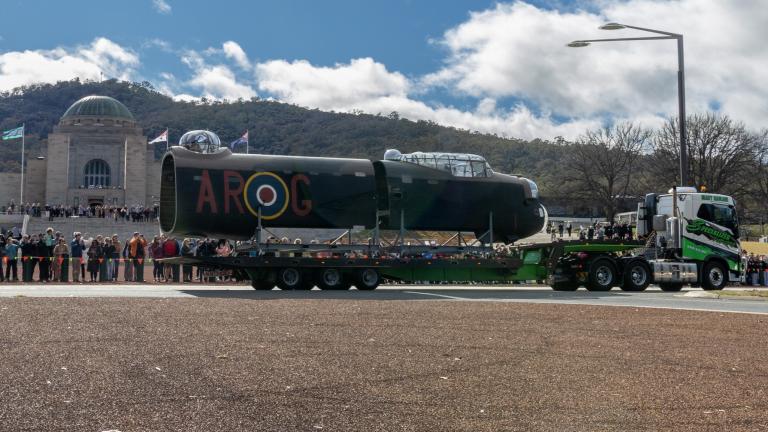
Lancaster bomber, G for George, returns to the Australian War Memorial.
Image: Australian War Memorial
See also in this report
Protecting the nation and the region, Resilience in the face of global uncertainty and disruption, State of the Service Report 2026.
Serving the Community, Supporting veterans and their families, State of the Service Report 2026.
Find out more
Australian War Memorial (2026) Official opening of Anzac Hall and Atrium, AWM website, accessed 4 September 2026.
Australian War Memorial (2026) G for George lands back home at the Australian War Memorial, AWM website, accessed 9 September 2026.
LinkedIn (2026) Australian War Memorial’s Post, LinkedIn website, accessed 4 September 2026.
Prime Minister of Australia (2026) Opening of Atrium and Anzac Hall, PM&C website, accessed 4 September 2026.
The Office of the Official Secretary to the Governor-General (2026) Australian War Memorial Atrium and Anzac Hall Official Opening , OOSGG website, accessed 4 September 2026.