



Connected and ready – national emergency preparedness

Australia faces an increasingly complex emergency risk environment, with natural disasters occurring alongside evolving cyber, health, infrastructure and security threats. The scale, frequency and interconnected nature of these events highlight the importance of preparedness, resilience and the ability to respond rapidly when crises occur. Advances in technology, data sharing and cross-jurisdictional collaboration create opportunities for the APS to strengthen national readiness and improve outcomes for communities before, during and after emergencies.
Protecting Australians through integrated crisis management
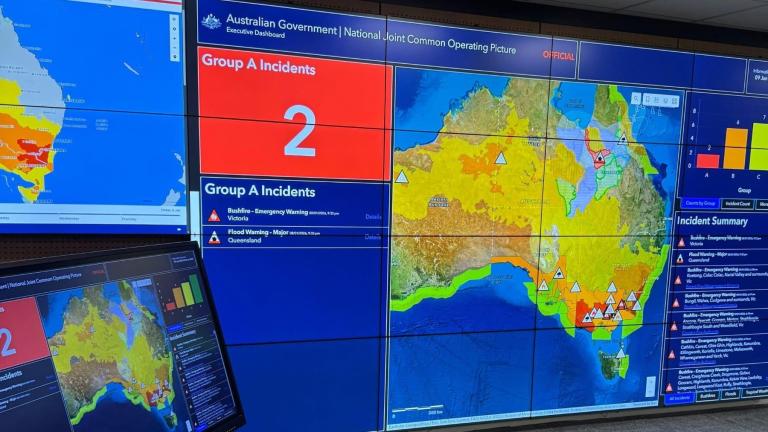
The National Situation Room.
Image: National Emergency Management Agency
Australians rely on governments to respond quickly and effectively during emergencies. The National Situation Room (NSR), operated by the National Emergency Management Agency, plays a key role in supporting that response.
In 2025–26, the NSR and National Security Hotline teams:
- produced 678 notifications and situational products
- handled more than 28,578 hotline contacts
- supported 6 Crisis Coordination Team activations spanning 199 days.
The NSR also supported national coordination arrangements for significant domestic and international events. Operating 24 hours a day, 7 days a week, the NSR monitors emerging risks, assesses potential impacts and supports national coordination during significant events. This helps governments prepare for and respond to severe weather, bushfires, floods, tropical cyclones, international emergencies and other complex crises.
The NSR brings together situational awareness, crisis intelligence and planning capabilities in a single environment. Working alongside specialists from the Bureau of Meteorology and Defence, NSR staff maintain a shared understanding of emerging situations and provide timely advice to decision makers.
This integrated model enables information to move quickly from monitoring and analysis to planning and action. It helps governments identify emerging risks, understand potential consequences and consider response options before situations escalate.
Partnership is central to the NSR's work. To support information sharing and coordinated responses during major events, the NSR works closely with state and territory governments, emergency services, industry partners and Australian Government agencies. This includes Home Affairs, Foreign Affairs and Trade, Geoscience Australia, and Prime Minister and Cabinet.
The value of this approach is particularly evident during periods of multiple concurrent emergencies. By drawing on expertise from across jurisdictions and sectors, the NSR can maintain a continuous national capability while supporting several events at the same time.
Helping Australians access disaster support when most needed
Services Australia and the National Emergency Management Agency (NEMA) are working together to make it easier for Australians to access support before, during and after a natural disaster. By combining their expertise, networks and channels, these agencies are improving how information, warnings and services reach communities, regardless of the disaster or where they live.
Services Australia deployed service officers and specialist staff to recovery centres in 36 locations, providing support to 5,800 people during the 2025–26 disaster response. Their mobile service centres visited 11 communities and supported more than 200 people to claim disaster assistance and connect with social work services, counselling and other government and community services. A total of 28,100 claims were received and $17.1 million dollars paid to customers across 5 disaster events activated during the 2025–26 Higher Risk Weather Season.
The collaboration is helping government better understand the experiences of different communities and design services that meet their needs. For example, Services Australia has shared initial findings from its research into the experiences of Aboriginal and Torres Strait Islander peoples during emergencies with NEMA. The research identified opportunities to improve service delivery, communication products and claims processes. These opportunities will inform improvements to emergency management planning, culturally safe service design, community engagement and future co-design activities. This will help ensure disaster support is more accessible, responsive and aligned to the needs of First Nations communities.
The agencies are also working together to support NEMA’s AusAlert team through community-based trials and the national test. Services Australia is using its specialist teams, community networks and digital channels to help Australians understand, prepare for and participate in the trials. This includes supporting more inclusive engagement with:
- First Nations peoples
- culturally and linguistically diverse communities
- older Australians
- people with disability
- people affected by family and domestic violence.
This approach helps make emergency warnings more accessible and inclusive, particularly for communities that may face greater barriers to receiving or acting on information. It also provides an opportunity to test what works with communities and improve services before they are needed at scale. Clearer processes and better coordination can help Australians access support faster and more consistently, supporting earlier recovery. Shared planning, communication and community engagement also help agencies respond more effectively as needs change during a disaster.
The work demonstrates how APS agencies can combine their capabilities to deliver services that are responsive, scalable and accessible. Services Australia's collaborative approach improves the timeliness, consistency and accessibility of support provided to disaster-affected communities. Strong governance arrangements, regular preparedness activities, established communication channels and real-time information sharing help agencies coordinate responses. It also helps agencies reduce duplication and support faster decision-making during emergencies.
By continuing to share insights, test approaches with communities and improve service pathways, Services Australia and NEMA are strengthening Australia’s national disaster response. They are also helping communities prepare, respond and recover.
Radiological and nuclear emergency preparedness
Preparing and planning for radiological or nuclear incidents is vital to protecting Australians and the environment from the harmful effects of radiation. Emergency preparedness and response is a key role of the Australian Radiation Protection and Nuclear Safety Agency.
In April 2026, the agency published the Australian Government Radiological and Nuclear Events Plan, marking an important step in strengthening the nation's emergency management arrangements. The plan embeds radiological and nuclear emergency management within the Australian Government's broader all-hazards approach to crisis response. This ensures that radiological and nuclear incidents can be managed through the same coordinated national arrangements used for other emergencies. It also helps governments respond effectively and proportionately when needed.
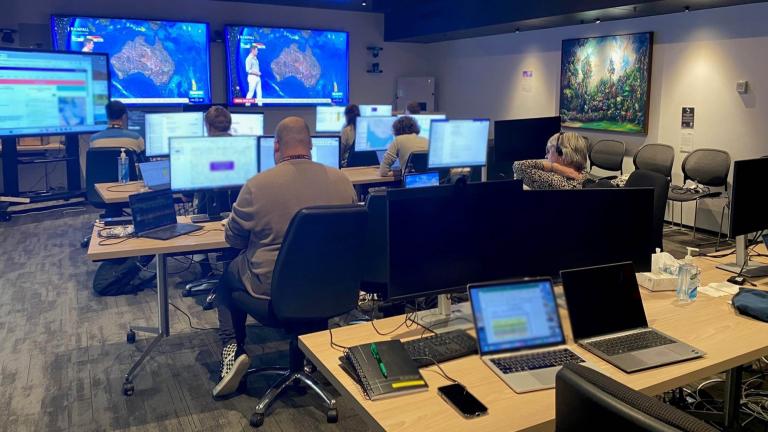
Australian Radiation Protection and Nuclear Safety Agency staff in the Radiation Emergency Coordination Centre, Melbourne, during the 2025 Middle East conflict.
Image: Australian Radiation Protection and Nuclear Safety Agency
At the centre of these arrangements is the Radiation Emergency Coordination Centre, based in Melbourne. The centre provides a national coordination capability during significant radiological or nuclear events. Drawing information from jurisdictions, national systems and international partners, it supports understanding of emerging situations and enables consistent, evidence-based advice across government. It also maintains strong links with international organisations, including the International Atomic Energy Agency, helping Australia remain informed about global developments and best practice.
The Australian Radiation Protection and Nuclear Safety Agency works closely with a range of entities to support preparedness and response arrangements. Entities include Foreign Affairs and Trade, the National Emergency Management Agency, state and territory governments, and other specialist agencies like the Australian Nuclear Science and Technology Organisation. Ongoing collaboration helps ensure Australian Government capabilities are integrated with jurisdictional emergency management systems and can be deployed effectively when required.
This approach reflects a shared understanding that radiological and nuclear incidents may occur alongside other emergencies, such as natural disasters or industrial accidents. Integrating specialist expertise into broader emergency management arrangements strengthens coordination and supports a unified response across multiple hazards.
National preparedness activities help build resilience across governments, emergency services, industry operators and local communities. Clear plans, established partnerships and well-defined coordination mechanisms improve readiness, strengthen decision-making and support faster mobilisation when required.
See also in this report
A healthy and safe Australia, National coordination for access to essential medicines, State of Service Report 2026.
Protecting the nation and the region, Critical minerals build Australia’s economic and national security, State of Service Report 2026.
Protecting the nation and the region, National Fuel Security Plan, State of Service Report 2026.
Find out more
Australian Radiation Protection and Nuclear Safety Agency (n.d.) Radiation Emergency Preparedness and Response, ARPANSA website, accessed 1 September 2026.
Australian Radiation Protection and Nuclear Safety Agency (n.d.) Australian Government Radiological and Nuclear Events Plan, ARPANSA website, accessed 1 September 2026.
National Emergency Management Agency (n.d.) NationalSituation Room, NEMA website, accessed 1 September 2026.
Prime Minister and Cabinet (2024) Australian Government Crisis Management Framework, PM&C website, accessed 1 September 2026.
Services Australia (n.d.) Natural disaster support, Services Australia website, accessed 20 August 2026.