



Trust and satisfaction insights
Who trusts?


Gender
66% of men reported trust in public services compared to 58% of women.

Regional and metro areas
More people who live in metro areas reported trust in public services (65%) than people who live in regional areas (56%).

Income
69% of those earning above a weekly wage of $1,500 reported trust in public services compared to 59% of people earning less than $1,500 weekly.

Language spoken at home
74% of people who primarily speak a language other than English at home reported trust in Australian public services, compared to 61% who primarily speak English at home.

Trust in people
79% of people who trusted others[8] also reported trust in public services, compared with 42% for those who distrusted others.

Age
Trust in public services was highest for people aged 18–34 (68%) and lower for people aged 35–64 (58%) and 65+ (62%).

Education levels
65% of those who graduated year 12 reported trust in public services compared to 48% of people who left education before year 12.

Country of birth
67% of people born in a country other than Australia reported trust in Australian public services compared with 61% of people born in Australia.
What aspects of services were people satisfied with?
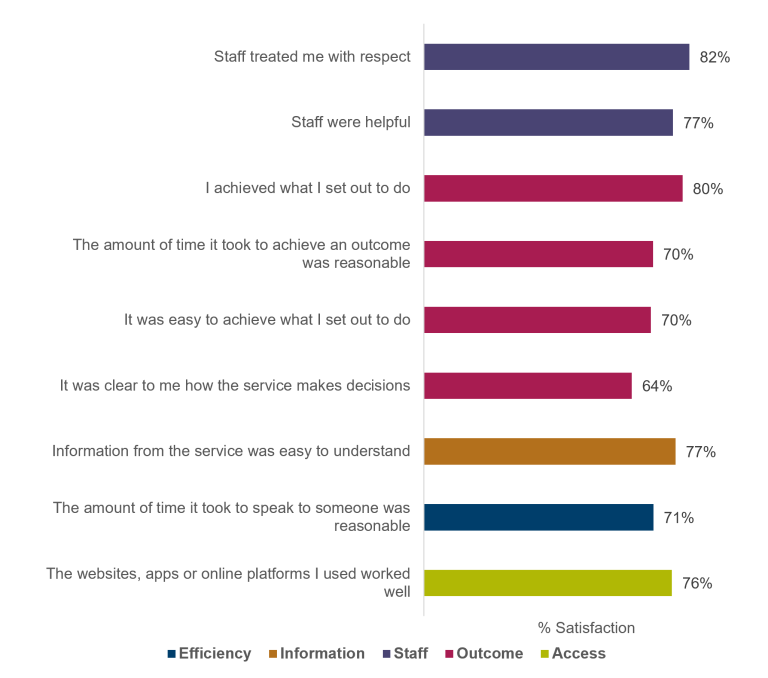
In 2025–26, people were most satisfied[4] with:
- their respectful interactions with staff
- that they achieved what they set out to do
- that information from the service was easy to understand.
People were least satisfied[5] with elements of service processes, such as:
- the process being unclear or taking too long
- information provided was unclear or confusing.
80% of people indicated that they achieved what they set out to do and 70% indicated it was easy to do so.
Figure 2: Proportion of people who were satisfied with elements of the service
What aspects of services were people dissatisfied with?
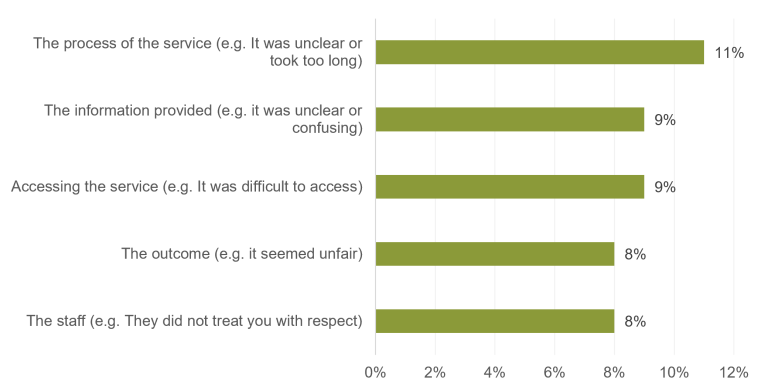
Respondents who reported a decline in trust over the last year often cited unclear or lengthy processes (11%), confusing information (9%) or difficulty accessing the service (9%).
Figure 3: Proportion of people who were dissatisfied with an aspect of service
“I am not getting the help or understanding I need. I get different answers every time and have still not heard anything back from my formal review decision yet.”
Woman, 32, Metro ACT, July 2025
“Staff are not very knowledgeable and give false information, when returning to deal with a more experienced member of staff things are an easy fix.”
Woman, 53, Regional Queensland, February 2026
“Things seem to be getting harder and more complicated not just to access, but to use and get results from.”
Man, 46, Regional Victoria, June 2026
How does trust and satisfaction compare across agencies?
Figure 4: Trust and satisfaction across agencies[9]
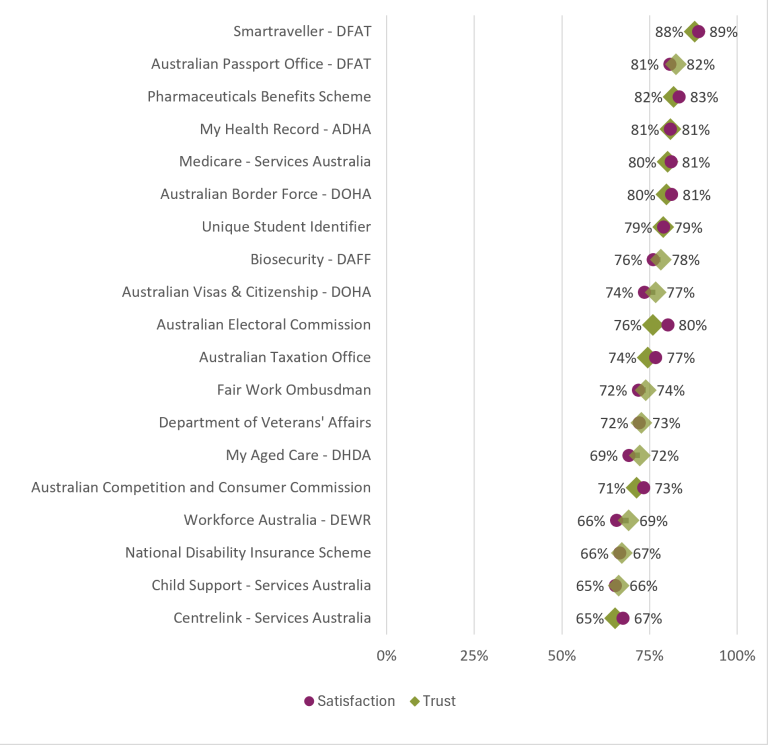
Note: ADHA: Australian Digital Health Agency, DAFF: Department of Agriculture, Fisheries and Forestry, DEWR: Department of Employment and Workplace Relations, DFAT: Department of Foreign Affairs and Trade, DHDA: Department of Health, Disability and Ageing, DOHA: Department of Home Affairs.
Want more detail on services?
See the next section for more findings and explore our data online through our interactive dashboard.
Footnotes
[1] Q7: Overall trust is the proportion of people who answered “Strongly agree” or “Agree” when asked “How much do you agree with the following statement – ‘I can trust Australian public services’”.↩ Return to text
[4] Q27: Proportion of people who answered “Strongly agree” or “Agree” when asked how much they agreed with statements about their service experience. The proportion is adjusted pro rata for the amount of services each individual was asked about ↩ Return to text
[5] Q27: Proportion of people who answered “Strongly disagree” or “Disagree” when asked how much they agreed with statements about their service experience. The proportion is adjusted pro rata for the amount of services each individual was asked about. ↩ Return to text
[7] Q36: Life satisfaction is the proportion of people who answered “Completely satisfied” or “Satisfied” when asked “Overall how satisfied or dissatisfied are you with life as a whole these days?”.↩ Return to text
[8] Q37: Trust in other people is the proportion of people who answered “Strongly agree” or “Agree” when asked “How much do you agree or disagree with the following statement – ‘Most people can be trusted’”. ↩ Return to text
[9] Agency refers to both agencies and master programs run by agencies. ↩ Return to text